Tracking and monitoring of stock in health facilities has been made simpler
In the complex landscape of healthcare, the availability of essential medicines and medical supplies is a cornerstone of effective patient care. Yet, ensuring that the right medications are in the right place at the right time remains a persistent challenge, particularly in resource-constrained settings. Stock-outs can lead to interrupted treatments, compromised patient outcomes, and decreased public trust in health systems. Conversely, overstocking can result in significant financial losses due to expiry and storage costs. Bridging this gap requires robust, reliable, and user-friendly inventory management systems.
Recognizing this critical need, EPN developed a powerful solution: the Availability Monitoring Tool (AMT) for Essential Medicines and Medical Supplies. The tool was developed to strengthen stock management practices within member health facilities and ultimately simplify the complex task of tracking and monitoring essential supplies.
Addressing the Core Challenges of Stock Management
Traditional methods of stock management in many health facilities often rely on manual processes, fragmented record-keeping, and reactive responses to shortages or excesses. This lack of systematic tracking makes it difficult for healthcare workers and administrators to gain a clear picture of their inventory levels, usage patterns, and future needs. The consequences are tangible:
- Frequent Stockouts: Patients are unable to receive necessary treatment, leading to poor health outcomes. This is particularly devastating for chronic conditions requiring continuous medication.
- Increased Costs: Rush orders during stockouts incur higher procurement costs. Overstocking leads to wasted resources when medicines expire before use.
- Inefficient Resource Allocation: Without accurate data, planning for procurement, storage, and distribution becomes guesswork, leading to misallocation of limited funds and personnel.
- Lack of Data for Decision Making: It’s hard to identify systemic issues, predict future demand, or negotiate effectively with suppliers without reliable consumption and stock data.
This Availability Monitoring Tool was specifically designed to tackle these challenges head-on. Two primary objectives guided its development:
- To assist healthcare workers in proactively managing their inventory and making informed, data-driven decisions about purchasing, restocking, or even reallocating medications between facilities if necessary.
- To identify patterns in medication shortages or excesses over time, allowing for better long-term planning, more accurate forecasting, and optimized resource allocation at the facility and potential network level.
Building a Relevant and Targeted Tool: The Concept of Tracer Medicines
A key feature of the AMT is its focus on “tracer medicines” and medical supplies. Rather than attempting to track every single item in a facility’s inventory (which can be overwhelming), the tool concentrates on a carefully selected list of essential items. These tracers act as indicators, providing a representative snapshot of the availability of crucial supplies across various therapeutic areas.
The selection of these tracer medicines was a rigorous process. It involved a thorough assessment of the World Health Organization’s Essential Medicines List (WHO-EML), a globally recognized standard for basic healthcare needs. Crucially, this was complemented by reviewing the National Essential Medicine Lists (NEMLs) of several specific countries where EPN has a significant presence or where member facilities operate. This crucial step ensures that the tracer list is not just globally relevant but also contextually appropriate to the specific disease burdens and approved treatment protocols within these nations.The countries whose NEMLs informed the selection process include Kenya, Tanzania, Lesotho, Cameroon, Burundi, DRC, Rwanda, Zimbabwe, Zambia, South Sudan, Ghana, Sierra Leone, Malawi, and Nigeria.
By referencing these national lists, the AMT ensures that the medicines being tracked are considered essential by national health authorities and are most likely to be in high demand within participating facilities. The tool includes prompts for users to confirm if a listed tracer medicine is also on their specific country’s NEML, further emphasizing its relevance and utility within the local context.
Comprehensive Coverage: Essential Supplies Across Key Health Priorities
The selected tracer medicines and medical supplies within the AMT are organized and classified according to EPN’s key health priorities. This structure ensures that monitoring efforts are aligned with the most pressing health needs addressed by the member facilities. The tool covers essential items for a wide range of conditions and services, including:
- a). Non-Communicable Diseases (NCDs): Addressing the growing burden of conditions like hypertension, diabetes, and cardiovascular diseases.
- b). Communicable/Infectious Diseases: Covering essential treatments for prevalent infections, aligning with public health priorities.
- c). Neglected Tropical Diseases (NTDs): Ensuring the availability of specific medications needed to combat diseases disproportionately affecting vulnerable populations.
- d). Reproductive, Maternal, Neonatal and Child Health (RMNCH): Focusing on critical supplies for safe deliveries, antenatal and postnatal care, and child health interventions.
- e). Critical Emergency Medicines (CEM): Highlighting items essential for managing medical emergencies and providing immediate life-saving care.
- f). Infection Prevention and Control (IPC): Including supplies necessary to prevent and control infections within the healthcare setting, a vital component of quality care.
This comprehensive classification ensures that the AMT provides insights into the availability of medicines across the spectrum of services offered by health facilities, allowing for a holistic view of stock status. This range of conditions aligns with the EPN health priorities addressed in the 2021-2025 strategic plan.
Putting data to work: Key parameters measured by the AMT
The power of the AMT lies in the specific data points it captures. By standardizing the information collected, the tool enables 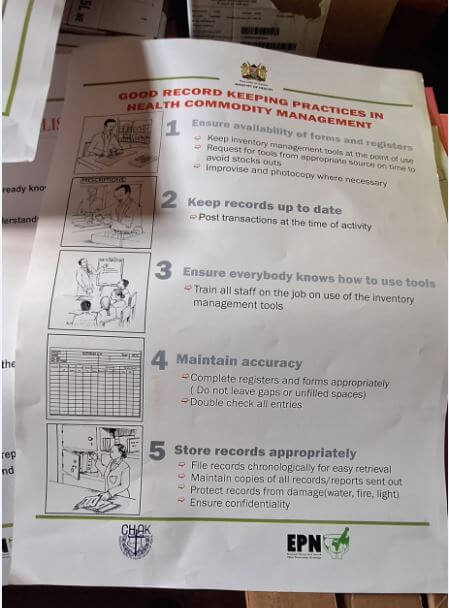 meaningful analysis and informed action. The parameters measured provide a detailed picture of inventory status and dynamics:
- Current Stock Position: This is the most fundamental metric – the exact quantity of a medicine or medical supply physically present in the inventory at the time of data collection. Knowing the current stock is the starting point for any stock management activity.
- Safety Stock: This parameter tracks the quantity of stock held as a buffer. It’s a crucial reserve designed to absorb unexpected fluctuations in demand, delays in the supply chain (lead time variations), or other unforeseen disruptions. Monitoring safety stock levels helps facilities assess their vulnerability to stockouts and adjust buffer quantities as needed to minimize risk and ensure continuous availability.
- Average Monthly Consumption (AMC): This metric represents the average quantity of a specific item consumed over a defined period (typically the past few months). AMC is vital for demand forecasting. It allows facilities to estimate how much of a medicine or supply they are likely to need in the coming months, which directly informs procurement planning and helps ensure appropriate quantities are available for patient treatment without excessive surplus.
- Lead Time: Monitoring lead time helps identify potential bottlenecks in the procurement and delivery process. Lead time is the average duration between placing an order for a product and receiving it in the facility’s inventory. Accurately tracking lead time is critical because it directly impacts when orders need to be placed (the reorder point) and the re
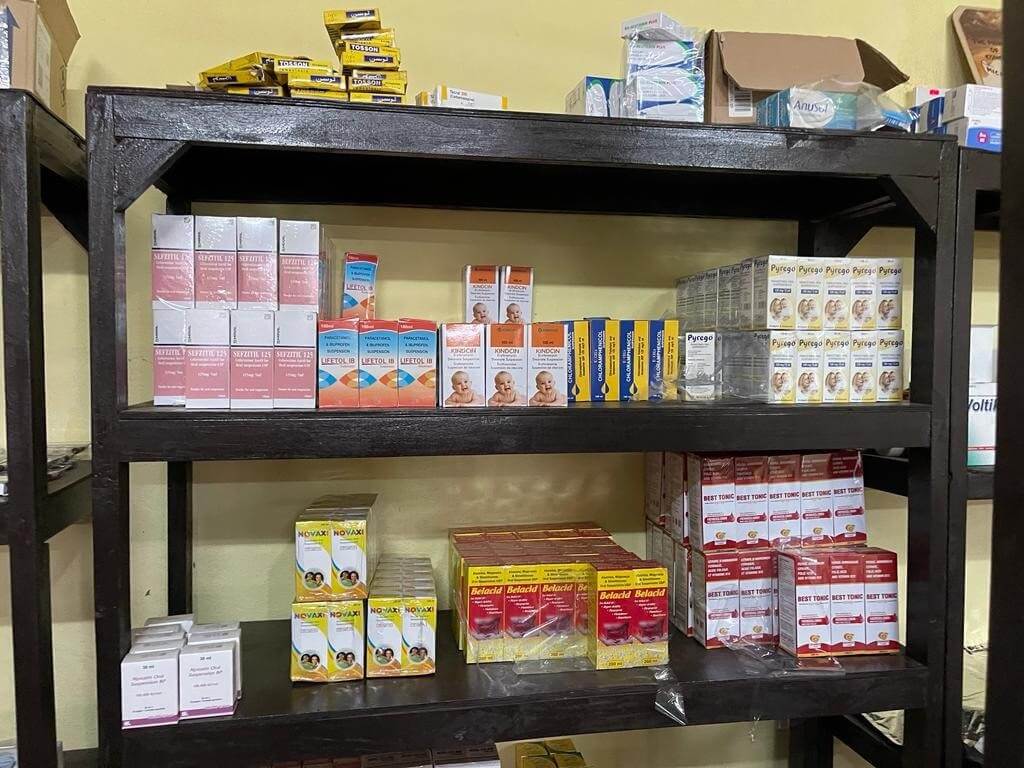 quired safe stock levels. Shorter, more predictable lead times allow for lower safety stock and more efficient inventory turnover.
 - Maximum Stock Level: This defines the upper limit for the quantity of stock that should be kept in inventory at any given time. Setting and monitoring maximum stock levels helps prevent overstocking, which ties up capital, increases storage costs, and raises the risk of expiry or damage. It ensures sufficient stock to meet needs during the procurement period plus safety stock, but no more than is reasonably necessary.
- Procurement Period: Understanding the full procurement cycle is essential for long-term planning and identifying areas where the process can be streamlined or made more efficient. Procurement period is the total duration of the process involved in acquiring stock, from the initial decision to purchase through budgeting, market research, soliciting bids, evaluating suppliers, placing orders, and finally receiving the goods.
- Stock on Order: Keeping track of stock on order is vital for calculating the true projected stock availability and avoiding placing duplicate orders or underestimating future stock levels. This parameter tracks items that have been formally ordered from a supplier but have not yet been received in the facility.
- Source of Supply: Recording where each product was procured from (e.g., central medical store, specific supplier, donation) provides valuable information. This helps to assess supplier reliability, quality assurance, pricing, and identify potential dependencies or diversification needs within the supply chain.
It is important to note, as the tool emphasizes, that the specific quantities recorded for these parameters will naturally vary from one health facility to another based on size, patient load, catchment area, and service profile. The tool provides the framework, but the data reflects the unique reality of each location. The integrated reference to the National Essential Medicine Lists underscores that while the tool provides universal parameters, it is designed to be used in conjunction with national guidelines and specific facility needs.
The Impact: Simpler Tracking, Stronger Systems
By systematically collecting and analyzing data on these key parameters for critical tracer medicines, the EPN Availability Monitoring Tool transforms stock management from a reactive chore into a proactive, data-driven process.
- Improved Decision Making: Healthcare workers are empowered with clear data to make informed decisions about when and how much to order.
- Reduced Stockouts and Expiries: Better forecasting and monitoring directly lead to fewer instances where essential medicines are unavailable or expire unused.
- Enhanced Planning: Identifying patterns in consumption and lead times allows for more accurate and efficient procurement planning.
- Resource Optimization: Minimizing waste from expiry and avoiding costly emergency orders ensures better use of limited financial resources.
- System Strengthening: Aggregated data from multiple facilities using the tool can provide valuable insights into broader supply chain challenges, helping EPN and national stakeholders identify systemic bottlenecks and advocate for improvements.
EPN is committed to enhancing pharmaceutical services and improving health outcomes in the communities they serve. The Availability Monitoring Tool is more than just an inventory checklist; it is a practical, scalable solution for collecting essential data that informs critical decisions in the pharmaceutical supply chain. By making the tracking and monitoring of essential medicines and medical supplies simpler, more structured, and data-driven, the AMT plays a vital role in strengthening health facility capacity and ensuring that essential care is never compromised by a lack of necessary medications.
