The Improving Pharmaceutical Access through Continuous Training (IMPACT) Project, supported by Action Medeor and the German Federal Ministry for Economic Cooperation and Development (BMZ), is working to enhance access to and quality of pharmaceutical care in rural areas across Kenya, Rwanda, and Tanzania. The project focuses on strengthening the capacity of healthcare workers in key areas such as medicine supply chain management, rational use of medicines, dispensing practices, and addressing the special needs of the elderly.
In Kenya, the project is implemented in partnership with the Christian Health Association of Kenya (CHAK), in close collaboration with the Kakamega County Government.
Last week, as part of ongoing implementation, EPN and CHAK conducted supportive supervisory and monitoring visits to selected health facilities in Kakamega County. The visits, led by EPN IMPACT Project Lead Dr. Sandra Aiyabei and CHAK Program Officer Ms. Queenter Olima, provided an opportunity to assess progress, track performance, and ensure alignment of project activities with set objectives.
Courtesy Calls to County Leadership
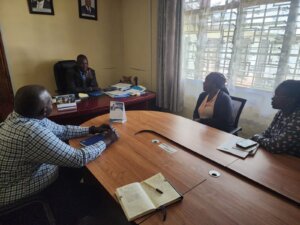
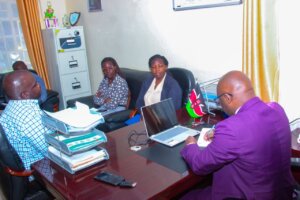
The visits began with courtesy calls to county health leadership, including the County Executive Committee Member (CECM) for Health, Dr. Livingstone Imbayi, Chief Officer of Health Dr. David Alilah, and Director of Medical Services Dr. Stephen Wandei, alongside other senior county officials.
During the meeting, the team shared project progress, highlighting notable improvements in the availability of essential medicines and health commodities, as well as enhanced quality of pharmaceutical care across health facilities. The discussions also emphasized strengthened collaboration between public and faith-based healthcare providers in the county.
Monitoring Visits to Health Facilities
The EPN and CHAK team, together with County Pharmacist Dr. Ayub Misiani (a master trainer) and Mr. Robert Chisaka, Head of Medical Supplies and County Vaccines Logistician, conducted monitoring visits to Bungasi Health Center, Khalaba Health Center, Shiseso Health Center, and Shisaba Dispensary.
During these visits, the team observed the implementation of facility action plans and documented several key improvements:
- Improved adherence to prescriptions: At Khalaba Health Center and Shisaba Dispensary, dispensing booths have been installed to enhance privacy during patient
 counselling and medicine dispensing. This has contributed to better treatment adherence, particularly for patients requiring frequent medication refills.
 - Strengthened governance structures: Facilities have established and operationalized Infection Prevention and Control (IPC) Committees and Medicines and Therapeutics Committees (MTCs), improving hygiene practices, antimicrobial stewardship, and monitoring of medicine use.
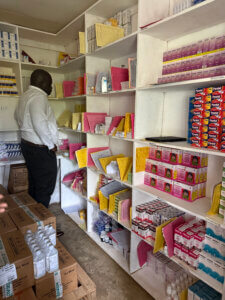
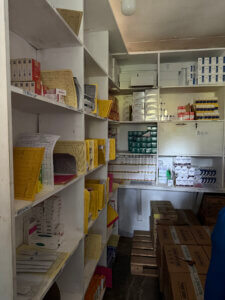
- Improved organization of medicines: Pharmacy stores and dispensing areas have been reorganized, with medicines properly classified and shelves clearly labeled, improving efficiency and accountability.
- Enhanced collaboration: There is growing coordination between public and faith-based health providers across the county, strengthening service delivery and resource sharing.
Through these interventions, the quality of pharmaceutical care in Kakamega County continues to improve steadily, demonstrating the value of continuous training, mentorship, and strong partnerships in building resilient health systems.