EPN believes that access (acceptability, availability, accessibility and affordability) to safe and quality medicines
for all, is one of the pillars and cornerstones to achieve the global development and any health goals for that matter. EPN has been committed to promoting access to essential medicines and strengthening pharmaceutical systems among its members as a way to promote health in the communities they serve. With the church sector providing anywhere between 10 and 60% of health care services in most low- and middle-income countries, it is quite evident that the church plays a major role in health care, and EPN as well plays a critical part.
Over the years and through various projects and initiatives, EPN has been very active in efforts of promoting access to safe and quality medicines. Among these projects include;
2015-2017 || Addressing lack of availability of children’s medicines in Uganda
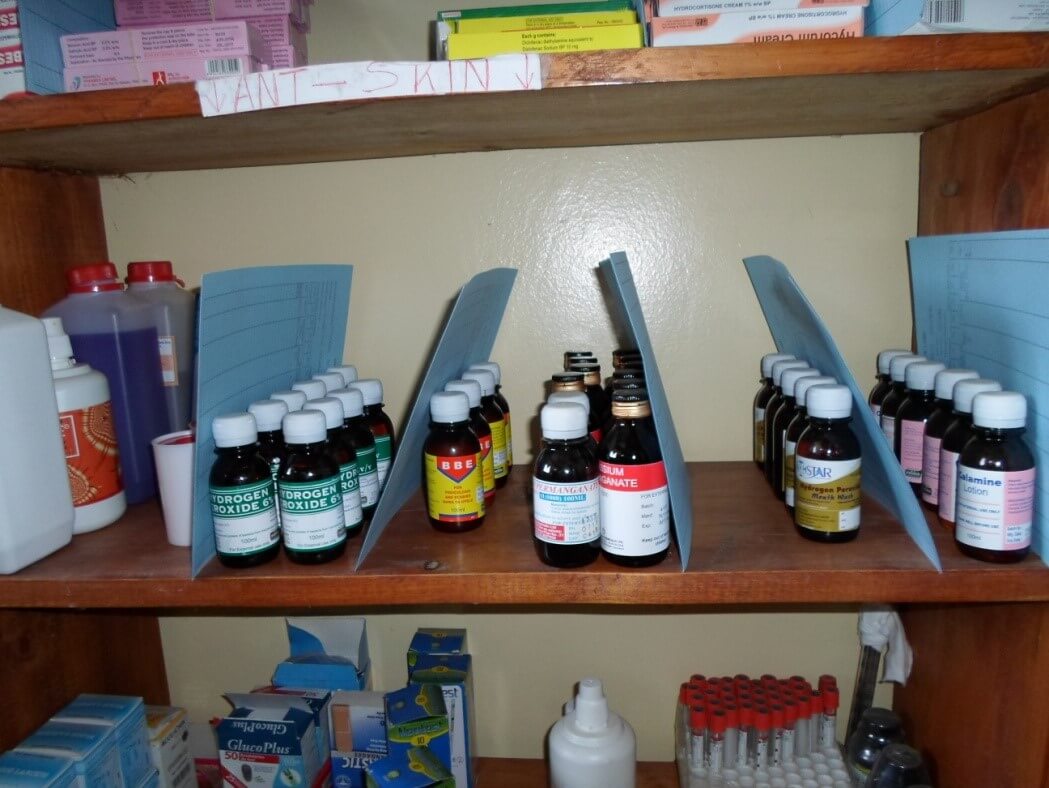
Children are not little adults, an old adage says. Unfortunately, they are treated as such in most Low- and Middle-Income Countries (LMICs), specifically where medicines are concerned. Vital, child-friendly medicines and formulations, such as solutions, suspensions, dispersible tablets like amoxicillin, children tablet dosages, combination of ORS and Zinc, are rarely ordered or are often out-of-stock. This results, inevitably, in bad pharmacy practices,such as breaking of adult tablet doses as a solution to treat a child. The chances of under dosing or overdosing a child increase dangerously with this practice, especially where tablet cutters are not used.
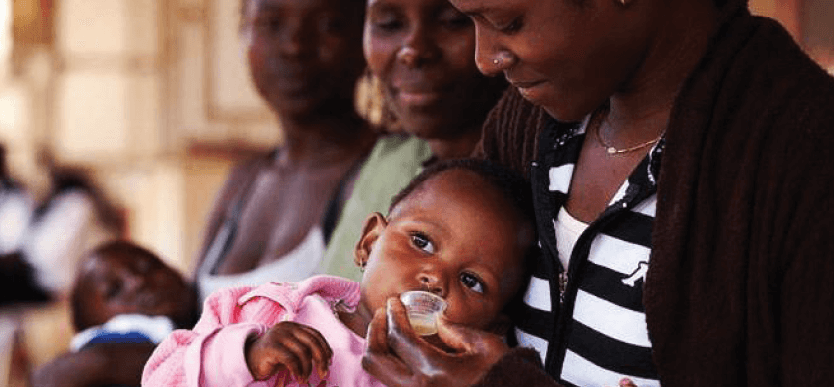
In a study we conducted in 2011 with a sample of sub-Saharan African countries; Chad, Ghana, Kenya and Uganda, it was indeed shown that there was poor availability of child-specific formulations, especially dispersible amoxicillin tablets, syrups and suspensions. To pilot interventions that could be scaled up in other EPN member countries, we implemented a project in Uganda to address this finding. In partnership with EPN members, Ugandan Protestant Medical Bureau (UPMB) and Uganda Catholic Medical Bureau (UCMB) and the support of Kindermissionwerk, Germany, the project was an intervention to improve the availability of children’s essential medicines in faith-based health facilities in Uganda. The project was initiated in 2015 and completed in 2017.
The intervention was designed as a Training of Trainers (TOT) which reached 72 healthcare facilities across Uganda.
Outcomes of the projects
- Increased awareness by appropriate stakeholders on the importance of stocking children specific formulations and medicines
- Improved good dispensing practices amongst the pharmacy personnel
- Commitment by the Ministry of Health (MOH) to engage not-for-profit (NFP) organizations in the National Health Budget including FBOs and inclusion of children-based formulations in the National Essential Medicines List. And ensuring availability
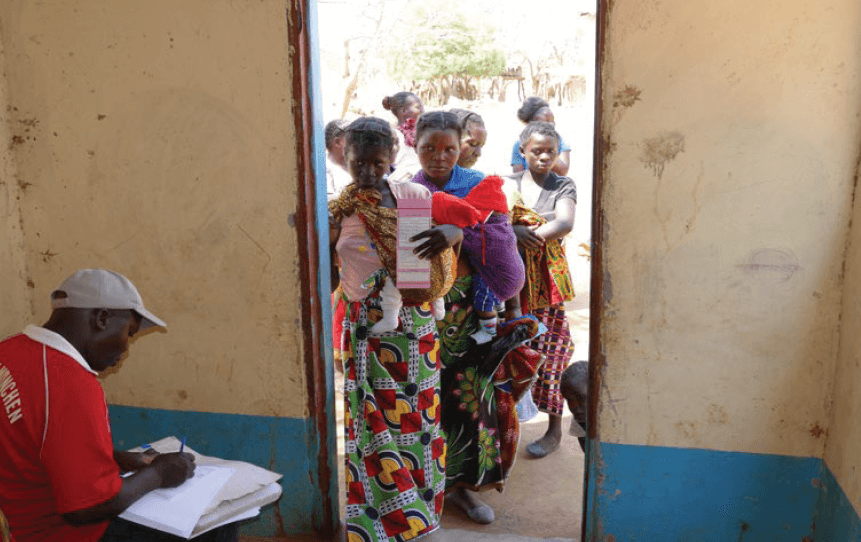
Despite this initial encouraging progress, by the end of 2017 there was no marked improvement in the chronic stock-outs of dispensible tablets of amoxicillin. The drug was simply still not on the market. Overall, dispensing practices have improved at the pharmacy level, stock management, supply chain performance and staff are using their training and taking more time to explain and ensure patients, especially parents, understand how to responsibly administer medicines to their children. We are optimistic that this will be sustained.
Lessons learned
- Any development intervention requires the inclusion of advocacy activities towards other stakeholder actors at various social constructs, whose function impacts on the intervention success and indeed, sustainability. However, advocacy yields results and a very slow pace that requires patience and persistence.
- While the TOT concept proved to have a commendable reach to health facilities for sustainable capacity building, in order to successful up-scale this intervention and be successful, more advocacy work is required, especially with medicines supply chain and resource allocation.
- Pharmaceutical systems strengthening is critical in addressing gaps surrounding access to children medicines. Further, health facilities need to be sensitized on the importance of prioritizing children medicines and formulations and the benefits of doing this.
2014-2015 || Access to Children’s medicines in Tanzania
Access to children’s medicines was also found to be a major challenge in Tanzania. One contributing factor to this is the lack of pharmaceutically trained staff in most facilities. The EPN survey done in 2013 that included 15 hospitals, 5 health centres and 30 dispensaries, indicated that pharmacy personnel in those institutions had not received any formal pharmaceutical training.
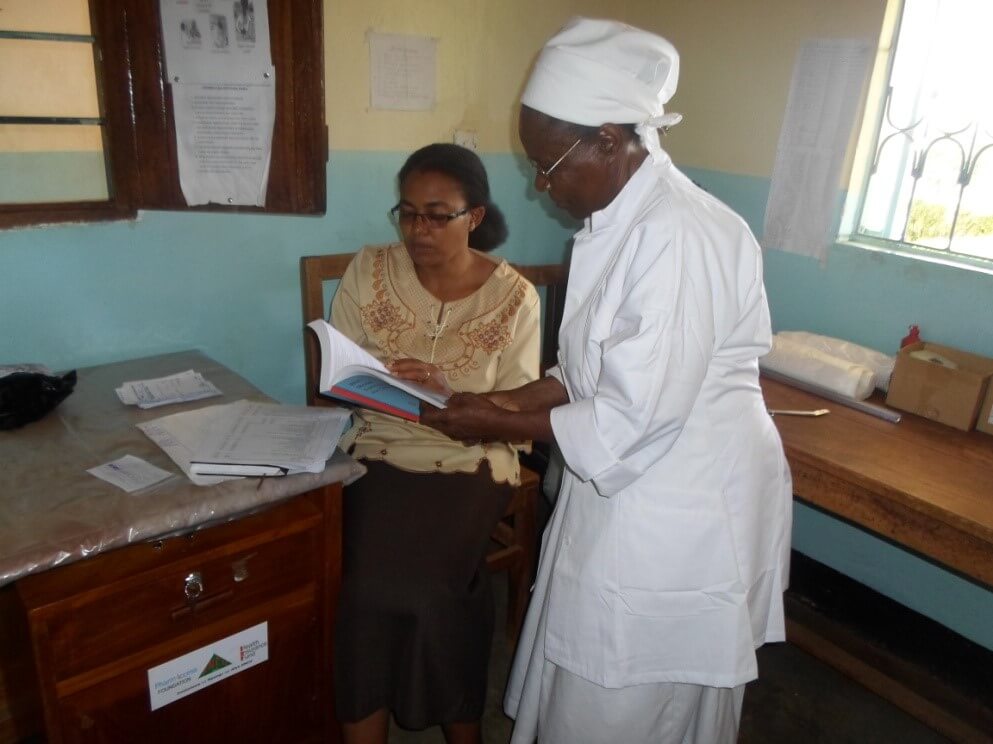
In the year 2014, in light of the pre-existing challenges, EPN together with its members in Tanzania; Mission for Essential Medical Supplies and Services and Christian Social Services Commission initiated a project aimed at increasing the access of essential medicines for children on all levels of 80 faith-based health facilities in Tanzania. The project to build capacity was based on the Training of Trainers (TOT) concept and started in September 2014, structured in four phases:
- Phase I: Training of Trainers
- Phase II: Training of pharmacy personnel in stock management and dispensing
- Phase III: Outreach to up to 80 health facilities to support action plans defined during phase II trainings
- Phase IV: Evaluation of children’s medicines’ availability at health facility level
The training called upon health care staff working in the pharmacy unit, and it targeted facilities with pharmacy staff without background knowledge in Pharmacy nor pharmacy training but working in the pharmacy. The training concentrated on:
- Stock management at the facility level
- Receiving and storing of medicines
- Inventory control using stock cards and other documents
- Quantification of medicines for ordering
- Rational use of medicines
- Importance of children’s medicine
Achievements:
- Fifty seven (57) pharmacy staff were trained in Arusha and Mwanza.
- On average, participants scored 20% higher in the examination test at the end of the training than during the pre-test.
- Participants immediately started implementing various practical lessons learnt from the training, such as the use of bin cards to manage stock, the use of counting trays when counting tablets, the use of SOPs, and the monitoring of storage conditions – such as temperature – for medicines.
2014-2015 || Access to Children’s medicines in Cameroon
The purpose of this project was to implement interventions to strengthen the pharmaceutical system at various levels of the health system in the church health sector in Cameroon and fill gaps related to the availability of children’s medicines. The criteria used were WHO’s ‘Priority medicines for mothers and children’, and the national medicines list and standard treatment guidelines in Cameroon.
In 2013, Cameroon Baptist Convention Health Services (CBCHS) and Presbyterian Church in Cameroon (PCC) investigated 35 health centres and 15 hospitals. Based on the results obtained, CBCHS and PCC implemented the following interventions in 2014:
- Up-dating of the medicine lists of both drug supply services to ensure children’s medicines were included and could be ordered and supplied to health facilities.
- Training of 50 pharmacy staff from the Northern and Southern regions of Cameroon to improve on stock management and dispensing. This training was held in Bamenda and Limbe in<September 2014.
- On average, the participants in Bamenda achieved 77% correct answers in the final test (ranging from 33% [with only 1 person below 50%] to 93%).
- Development and implementation of Standard Operating Procedures (SOPs) for inventory management in health facilities of four faith-based organizations: PCC, CBC, Eglise du Christ au Congo (ECC) and Organisation Catholique pour la Santé au Cameroun (OCASC).
- The antihistamine preparation mequitazine was added to the medicines list to enable better treatment and management of allergic reactions
- 76% of FBO health facilities surveyed stored oral rehydration salts (ORS) but only 24% provided Zinc, a drug recommended as an essential supplement for the treatment of diarrhoea
